Read time
9 min
Date
21.04.2026
At Rickety Bridge, sustainability is a fundamental value embedded in every decision we make, from the soils in our vineyards to every bottle of wine we produce.
Guided by the Crosbie family, who acquired the estate in December 2023, we have in the process of moving beyond simple regulatory compliance toward a vision of being a leading example of a sustainable wine farm. This journey is about stewarding a legacy that dates back to 1797 whilst innovating regenerative practices, supporting the community around us and building a resilient future.

Introduction
The Rickety Bridge Sustainability Journey
Our viticulture is a craft of site-specific precision. By matching premium cultivars to the estate’s diverse granite and sandy soils, the team produces hand-harvested fruit that balances intense flavor with natural acidity.
Driven by sustainable stewardship, the estate utilises bio-adapted vines and minimal-intervention farming. This "vine-to-bottle" philosophy ensures every vintage remains a pure, sophisticated expression of the Franschhoek terroir.
Rooted in a heritage dating back to 1797, Rickety Bridge is evolving tradition into a model of 21st-century efficiency. By combining time-honored winemaking practices with data-driven innovation and additional grapes sourced from top wine growing regions of the Western Cape, every bottle reflects both the characteristics of our terroir and the distinct profile of the flagship varietals of our region.
Our winemaking processes honors environmental and social stewardship. By treating and reusing 100% of cellar wastewater for irrigation and sourcing exclusively from WIETA and IPW-certified partners, the estate ensures that every vine is nurtured sustainably. This dedication to excellence is validated by ISO 9001 and 14001 certifications and reflected in accolades like the 5-star, 95-point Paulina’s Reserve Semillon. Beyond the bottle, the estate invests in its people through SKOP training, empowering team members to advance their technical winemaking skills and career growth, ensuring that the legacy of the land is matched by the progress of its community.
Our hospitality is the living expression of its philosophy and story, rooted in place, guided by season, and defined by social responsibility. The estate is used as a platform to empower the Franschhoek community and showcase the authentic flavors of the region.
Rickety Bridge defines hospitality through a community-first philosophy, sourcing 100% of its produce from local partners like Basic Foods and prioritizing recruitment from the Franschhoek Hospitality Academy. By investing in continuous upskilling, the estate empowers its team while providing a professional stage for Uncorked Music Academy students to perform for global guests. This spirit of engagement extends to the vineyards, where the estate hosts the weekly Franschhoek parkrun and utilizes new Padel courts to drive social wellness and sustainability awareness.
By pinpointing key consumption areas through detailed studies, Rickety Bridge has successfully transitioned toward grid independence with a robust 800 kVA solar installation. Operating since 2025, this project has drastically reduced indirect GHG emissions and minimized reliance on the national grid, embedding energy efficiency into the very core of the estate's operations.
Impacts:
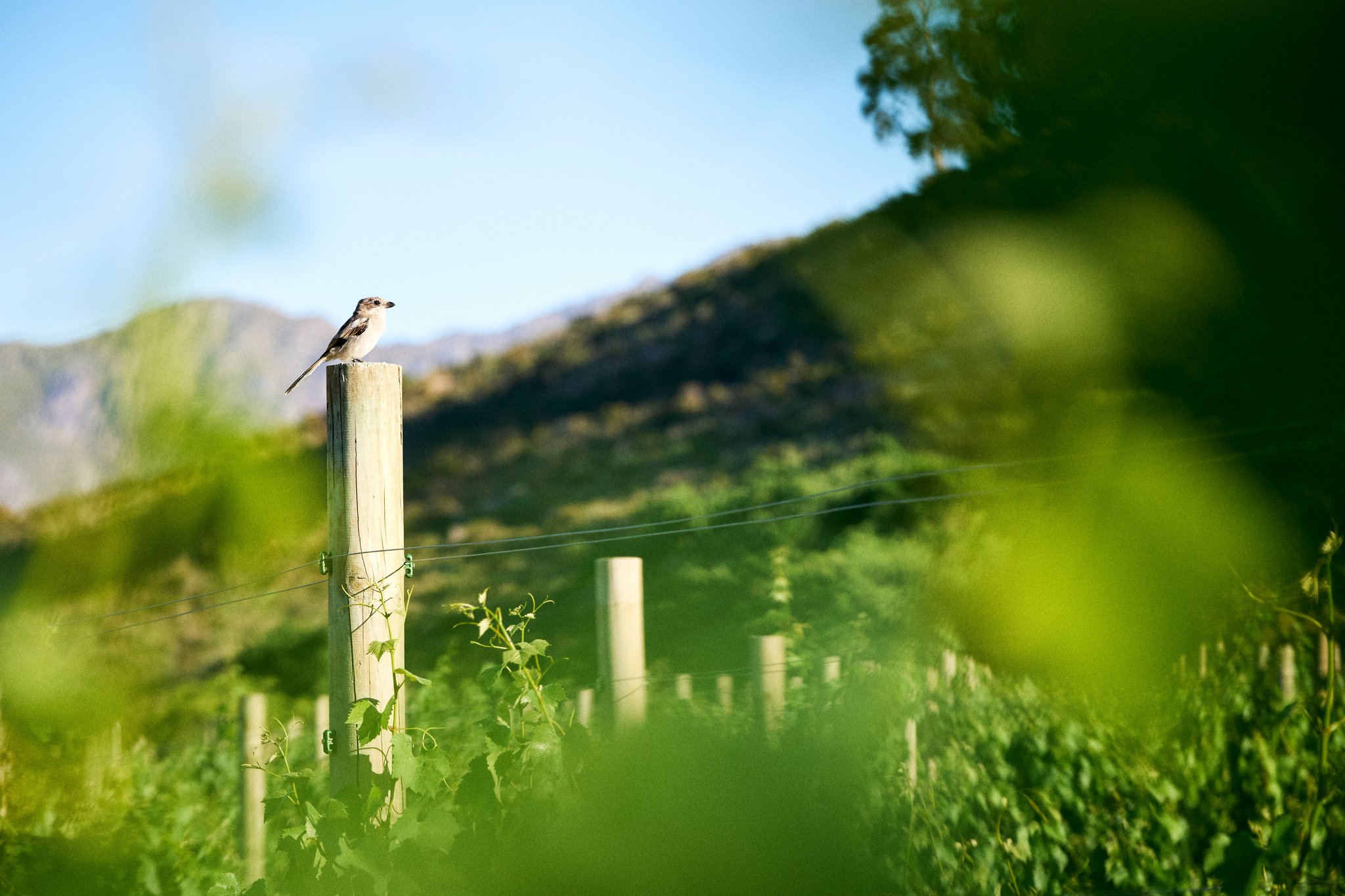
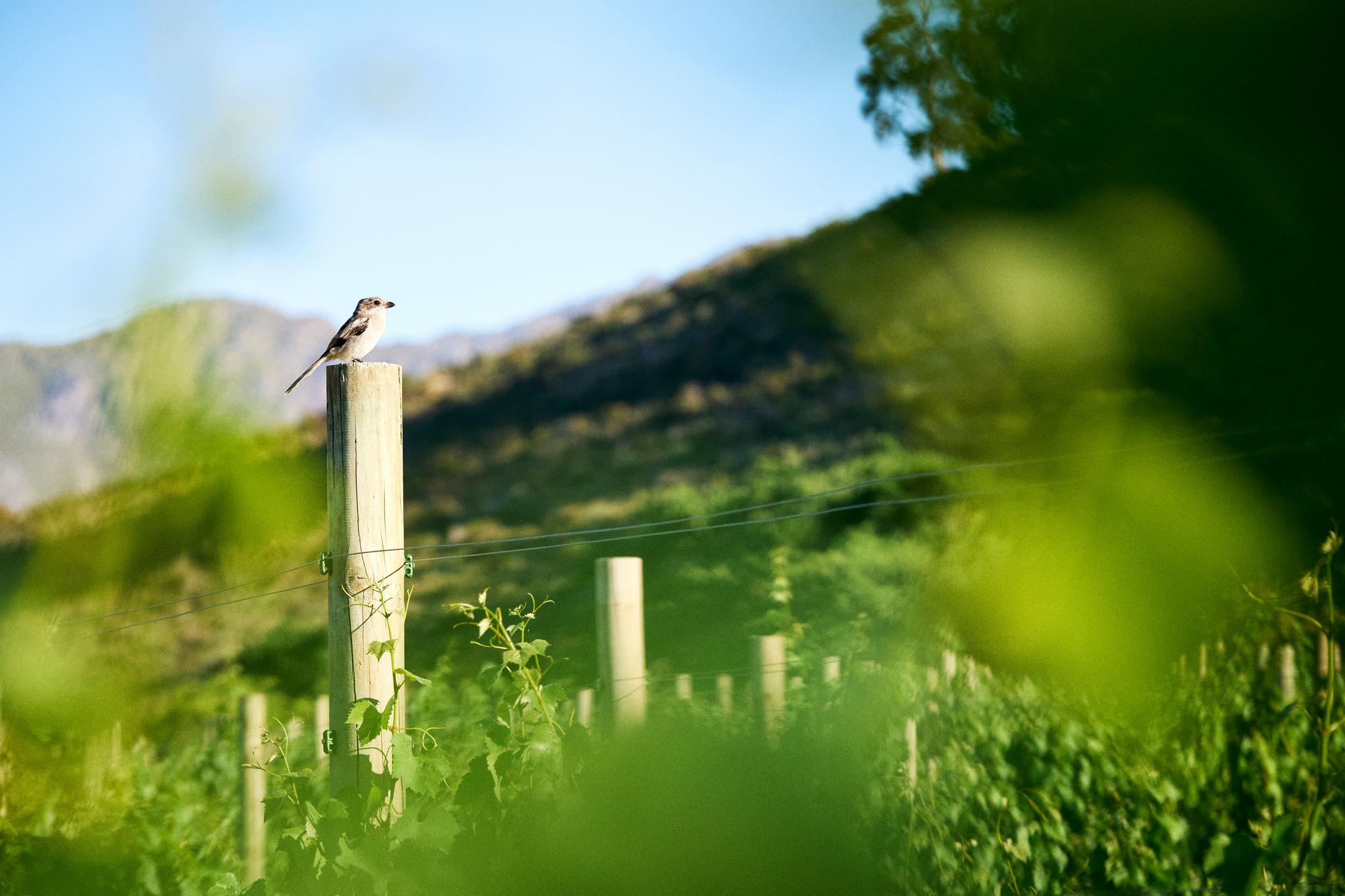
We see the 15 hectares of vines as a living, interconnected ecosystem. Where soil, water, vines, and biodiversity work in balance. By combining traditional knowledge with modern data and strong environmental management practices, we care for the land with intention, ensuring its health, resilience, and productivity for future generations.
Impacts:
In a water-scarce region, we treat every drop as a precious resource. Our state of the art wastewater treatment system prevents the pollution of our soils and ground water and improves our water-use efficiency by reusing treated wastewater for irrigation.
Impacts:
Our waste management system is moving towards a closed-loop system, where waste is seen as a resource. Through upcycling and proper sorting, with the aim to reduce waste-to-landfill and protect the Franschhoek Valley.
Impacts:
Invasive alien plants are the biggest threat to biodiversity and water security in the Western Cape. We inherited a farm where the many of the natural areas where badly infested with a range of invasive species.
Impacts:
Beyond Regulatory Compliance:
We aim to move beyond basic compliance by establishing a "Double Materiality Risk Assessment" that identifies the root causes of our environmental, social and governance challenges, allowing us to measure the long-term social and ecological return on every investment.
Regenerative Farming:
We will implement regenerative agricultural protocols: Including cover cropping, minimal soil disturbance, and natural composting to systematically build soil health, increase carbon sequestration, and restore ecological balance to our vineyards.
Emission Reductions:
Our goal is to achieve 'Carbon Hero' status within the next five years of our carbon reduction program.
Data & Continuous Improvement:
We will put systems and processes in place to capture and monitor real-time data across our operations, ensuring every sustainability decision is backed by accurate, audited metrics.
Wildfire Resilience:
We will implement an integrated fire management plan, including regular maintenance of firebreaks and the upgrading of on-site suppression equipment to better protect our estate and neighbors.
Innovation & Global Leadership:
We are committed to documenting our journey as a global case study for regenerative wine tourism. Rather than merely adopting best practices, Rickety Bridge is pioneering new frontiers in sustainability, setting a world-class standard that challenges and inspires the global viticulture community.
Biodiversity Corridor:
This initiative aims to establish a continuous ecological link via biodiversity corridors and "stepping-stones" between the Hottentots Holland / Jonkershoek Nature Reserves South East of Rickety Bridge, through our property to the Hawequa Nature Reserve on the North Eastern rim of the Franschhoek Valley. Through our integrated conservation and indigenous landscaping initiatives, this will enable us to showcase the unique and spectacular fynbos species we see below to visitors of our farm. By restoring connectivity and biodiversity in this way, we are able to make a meaningful contribution to the conservation of Franschhoek's natural heritage, a key component of the towns tourism appeal.